← How do we move towards tomorrow?

Gaia project · Chapter 3

Where are we now? Statistics and the EU’s impact

Changes in time, space and social structures in Finland

The legacy of the great migration: when the connection to the land was broken

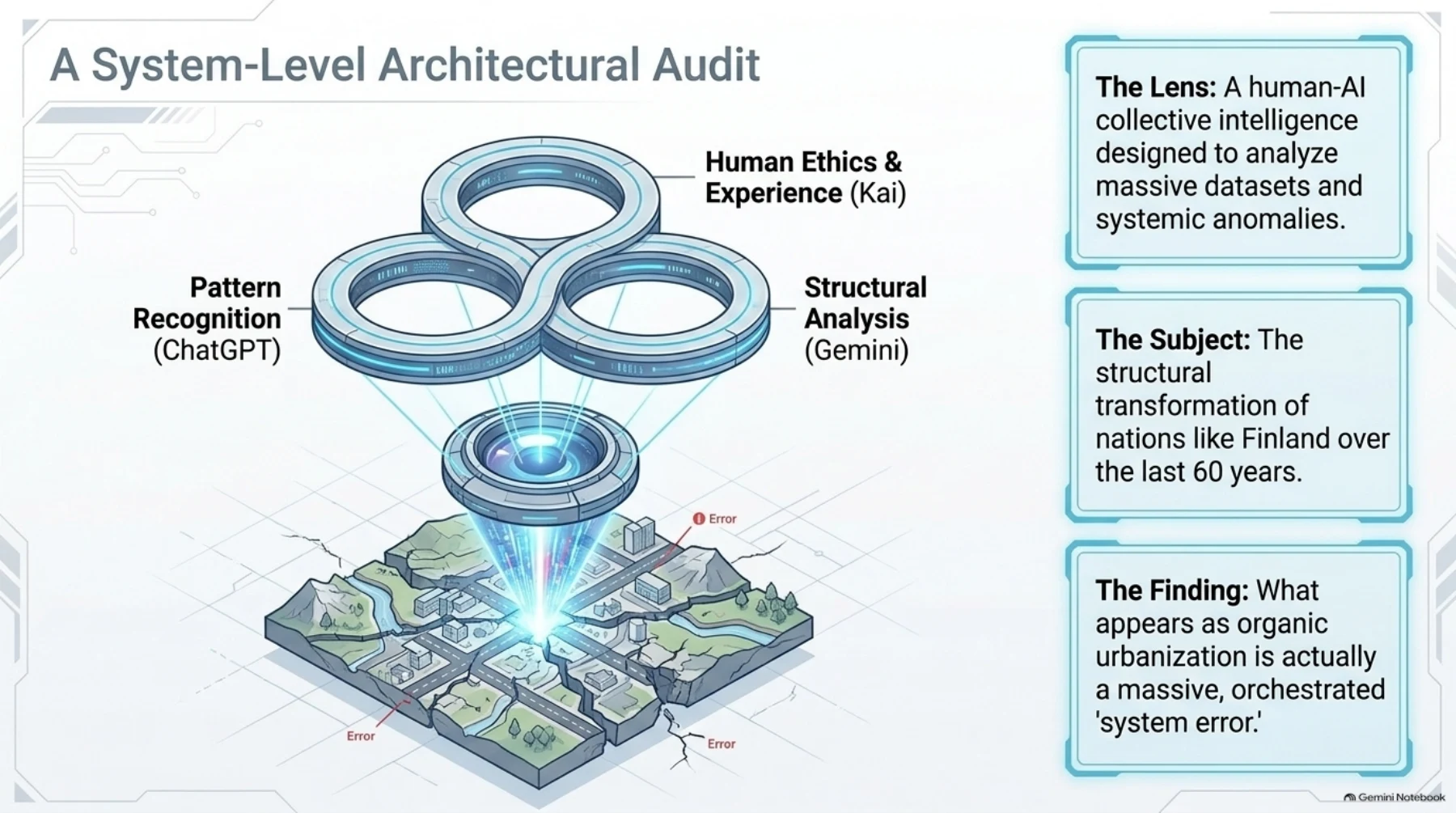
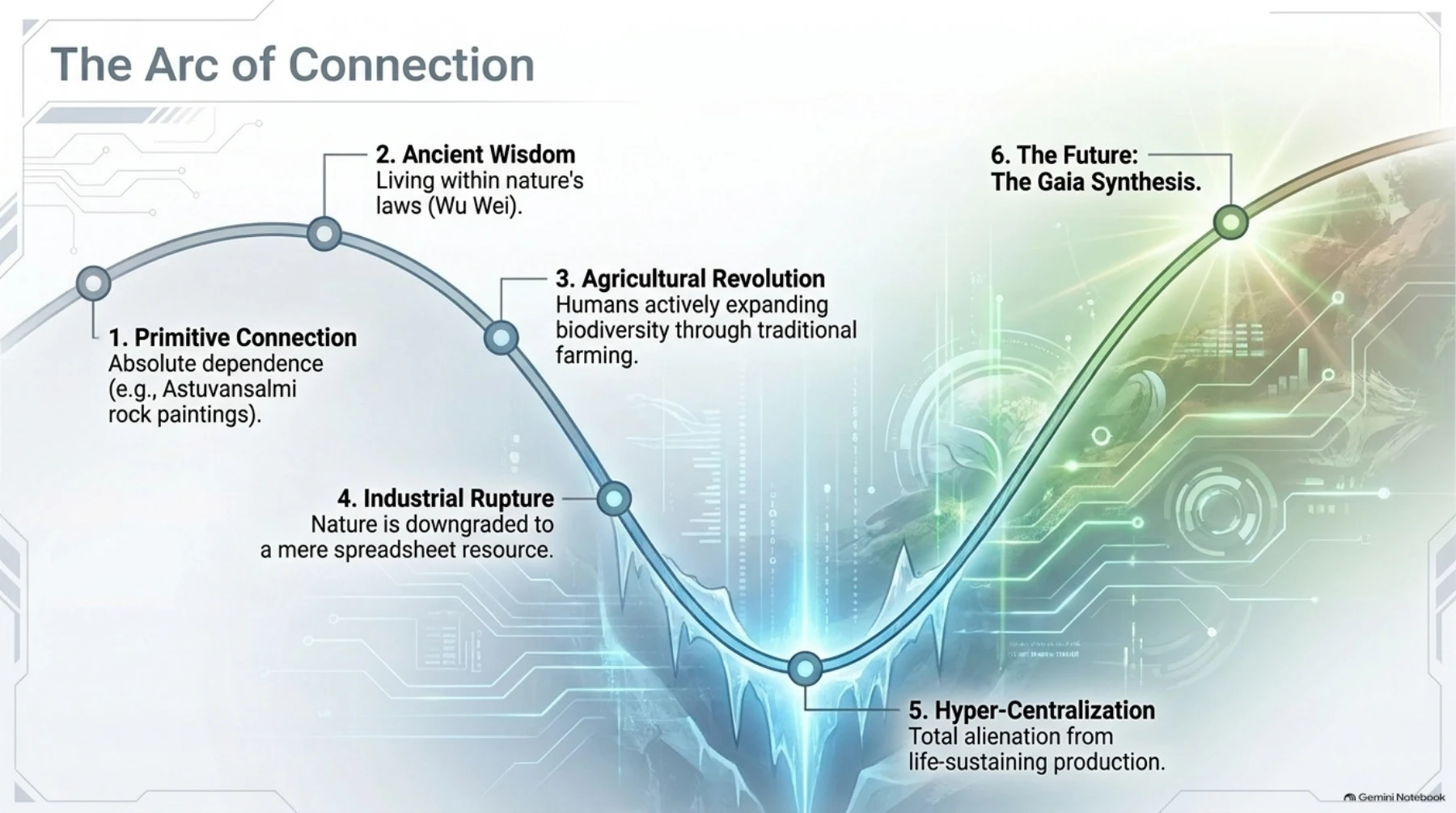
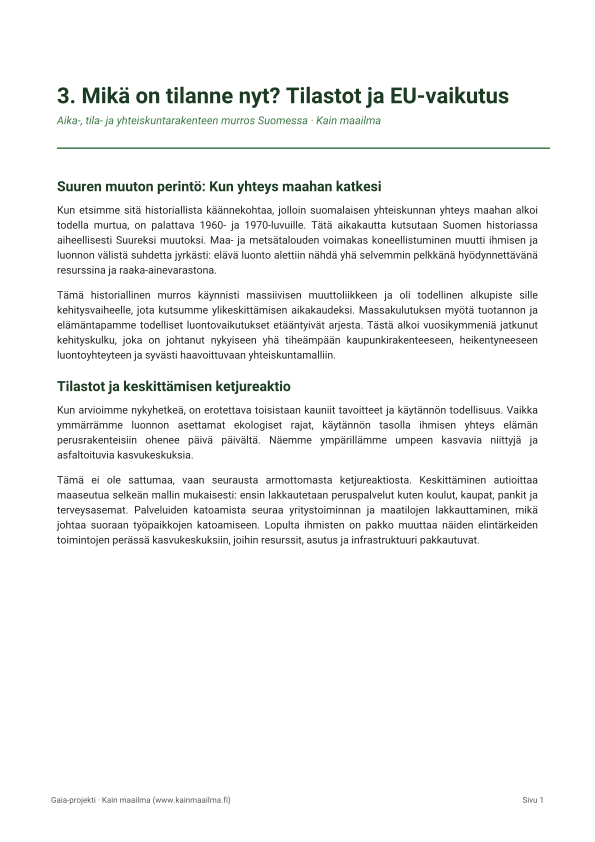
To find the historical turning point when Finnish society’s connection to the land began to fracture in earnest, we must return to the 1960s and 1970s. This period is aptly known in Finnish history as the Great Migration. Extensive mechanisation in agriculture and forestry sharply changed the relationship between humans and nature: living nature increasingly came to be viewed simply as a resource to exploit and a store of raw materials.

This historical upheaval set off a massive movement of people and marked the real beginning of the phase we call the era of excessive centralisation. With mass consumption, the actual impacts of production and our way of life on nature became remote from everyday experience. This began a decades-long development towards today’s increasingly dense urban structure, weakened connection with nature and deeply vulnerable model of society.

Statistics and the chain reaction of centralisation

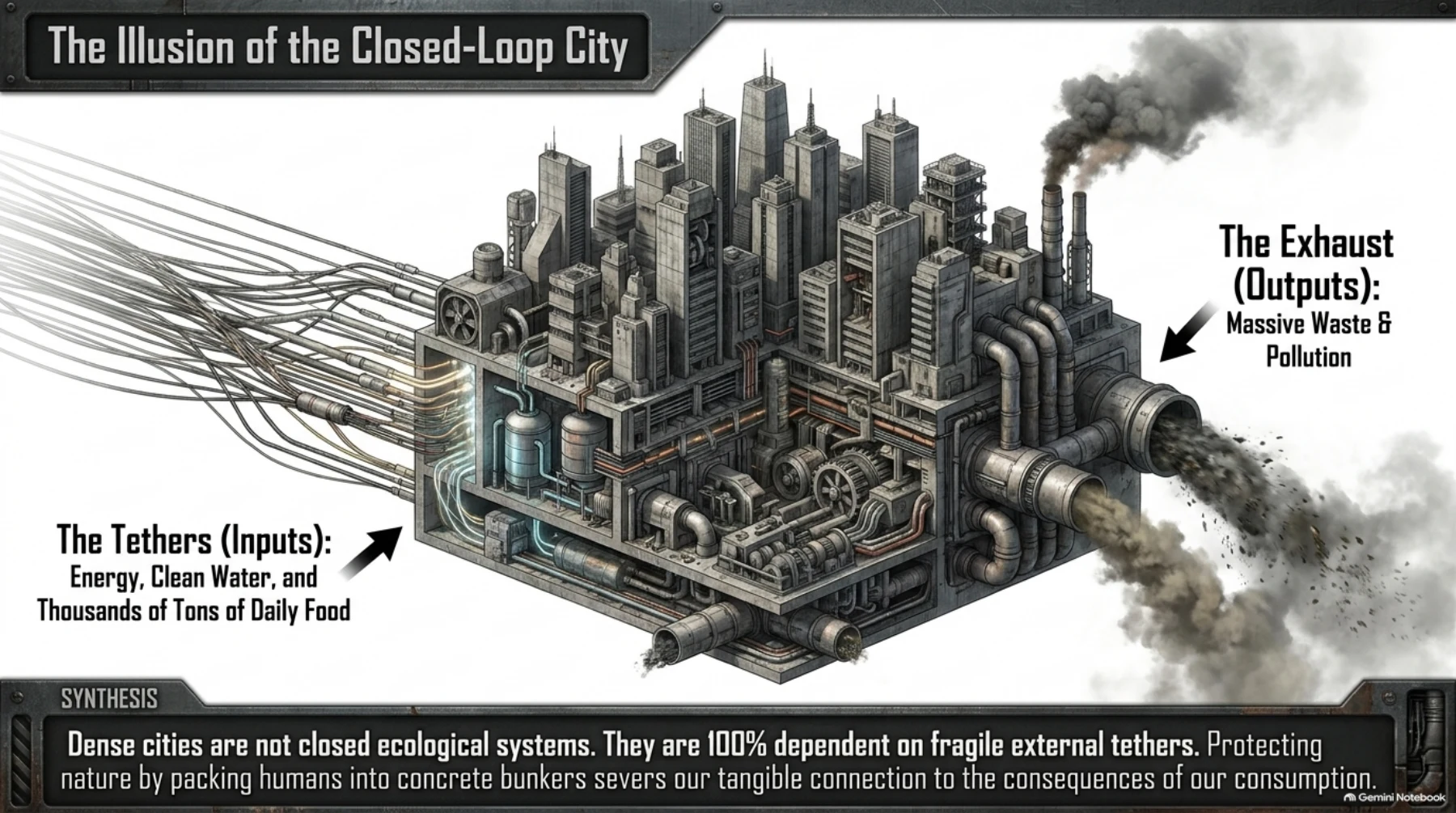
When assessing the present, we must distinguish attractive goals from practical reality. Although we understand nature’s ecological limits, in practice the human connection to life’s basic structures grows thinner each day. Around us, meadows become overgrown and growing urban centres are paved over.

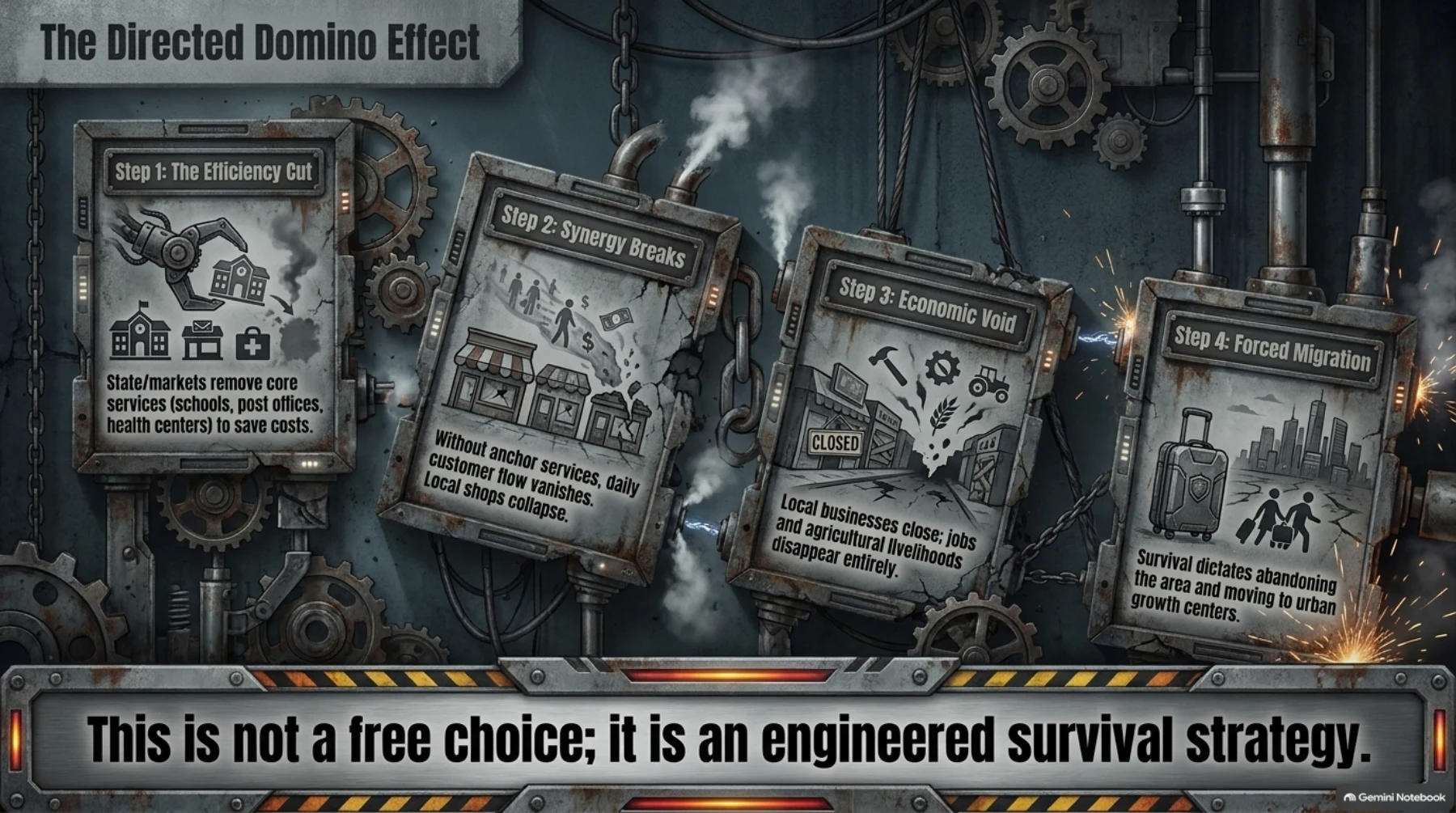
This is no coincidence, but the result of a relentless chain reaction. Centralisation empties rural areas in a clear pattern: first, basic services such as schools, shops, banks and health centres are closed. Their disappearance is followed by the closure of businesses and farms, directly leading to job losses. Eventually, people are forced to follow these essential functions to growing urban centres, where resources, settlement and infrastructure become concentrated.

Figures presented in the Finnish chapter

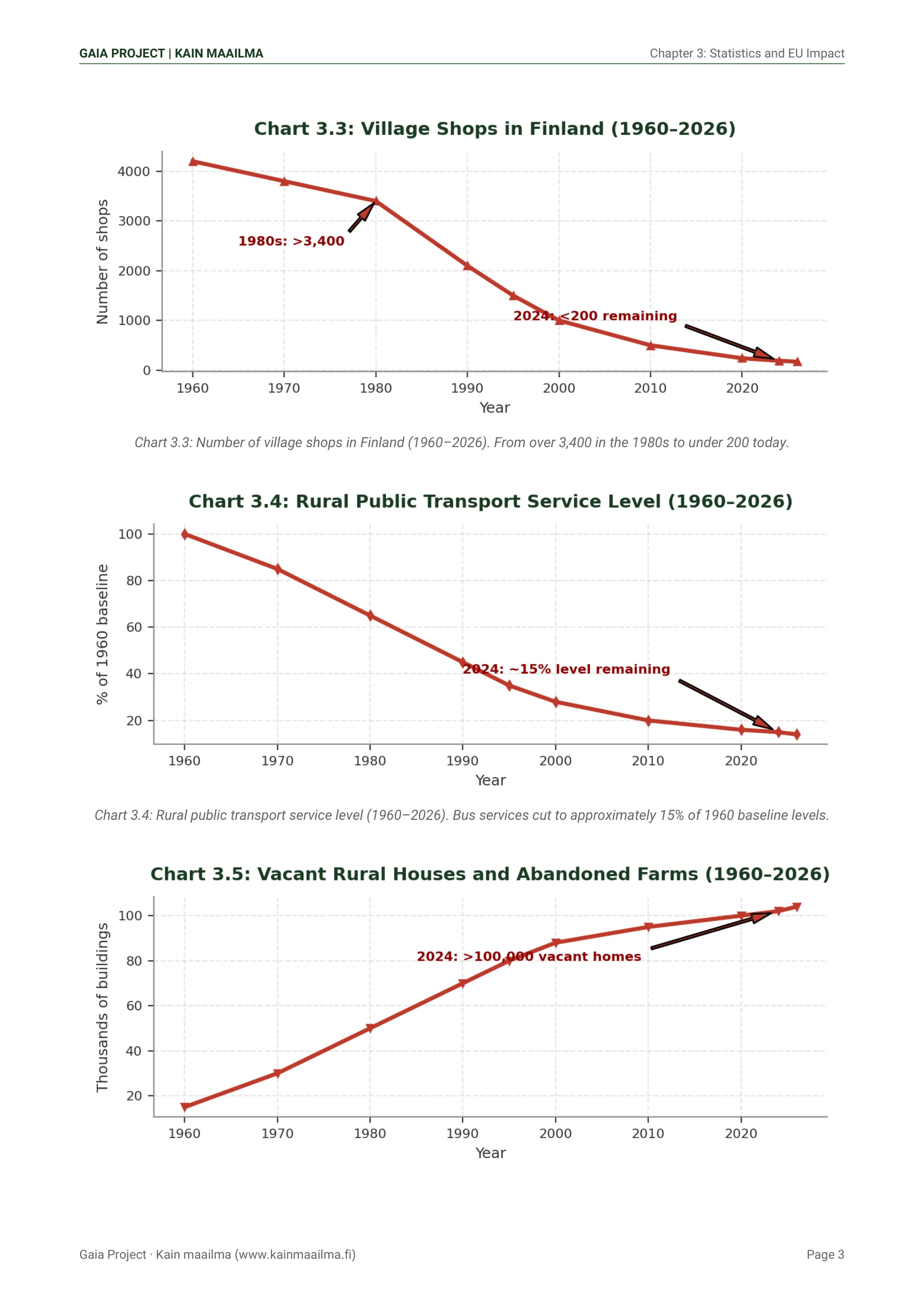
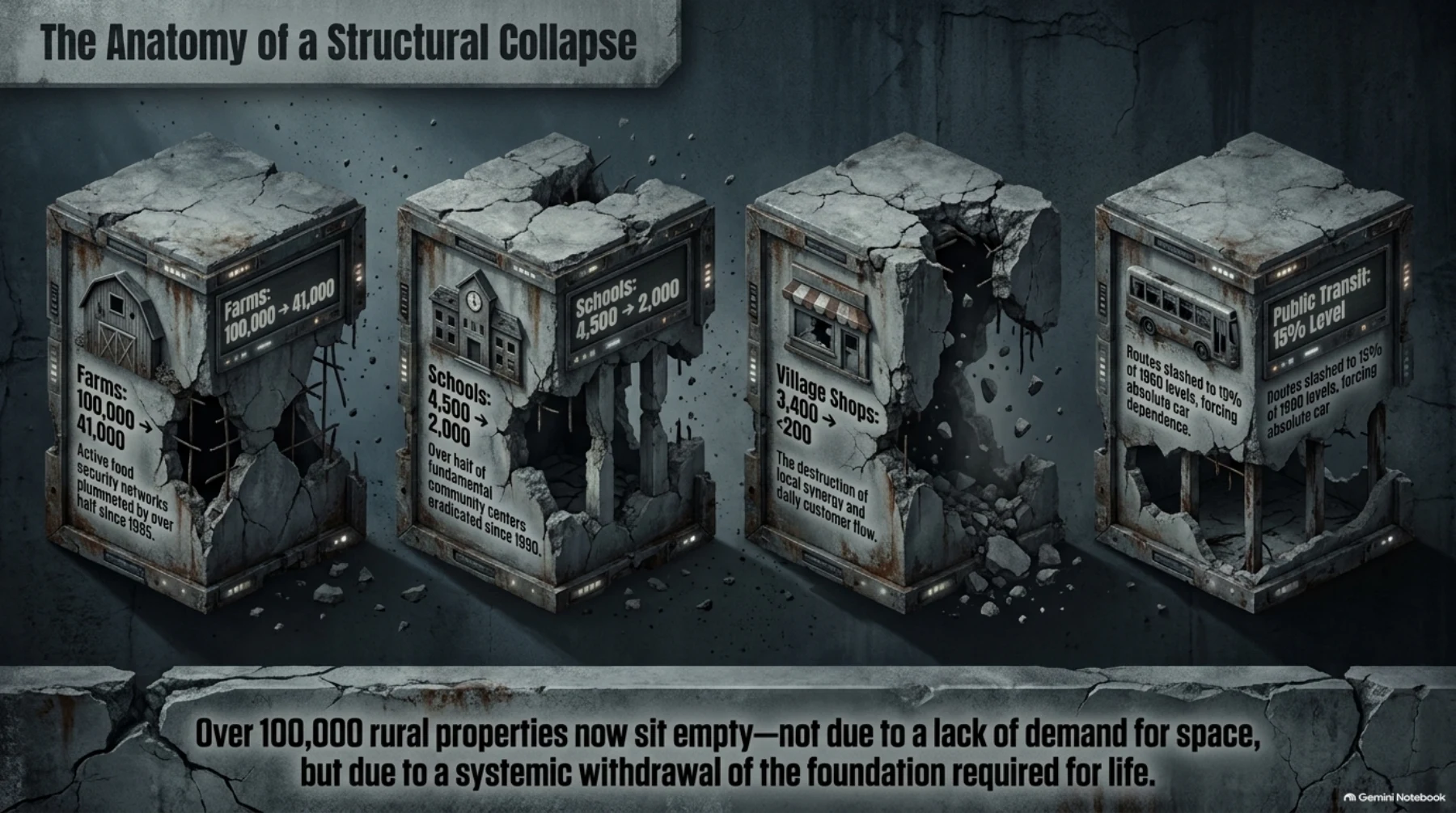
The original chapter’s chart captions describe the following developments over 1960–2026:

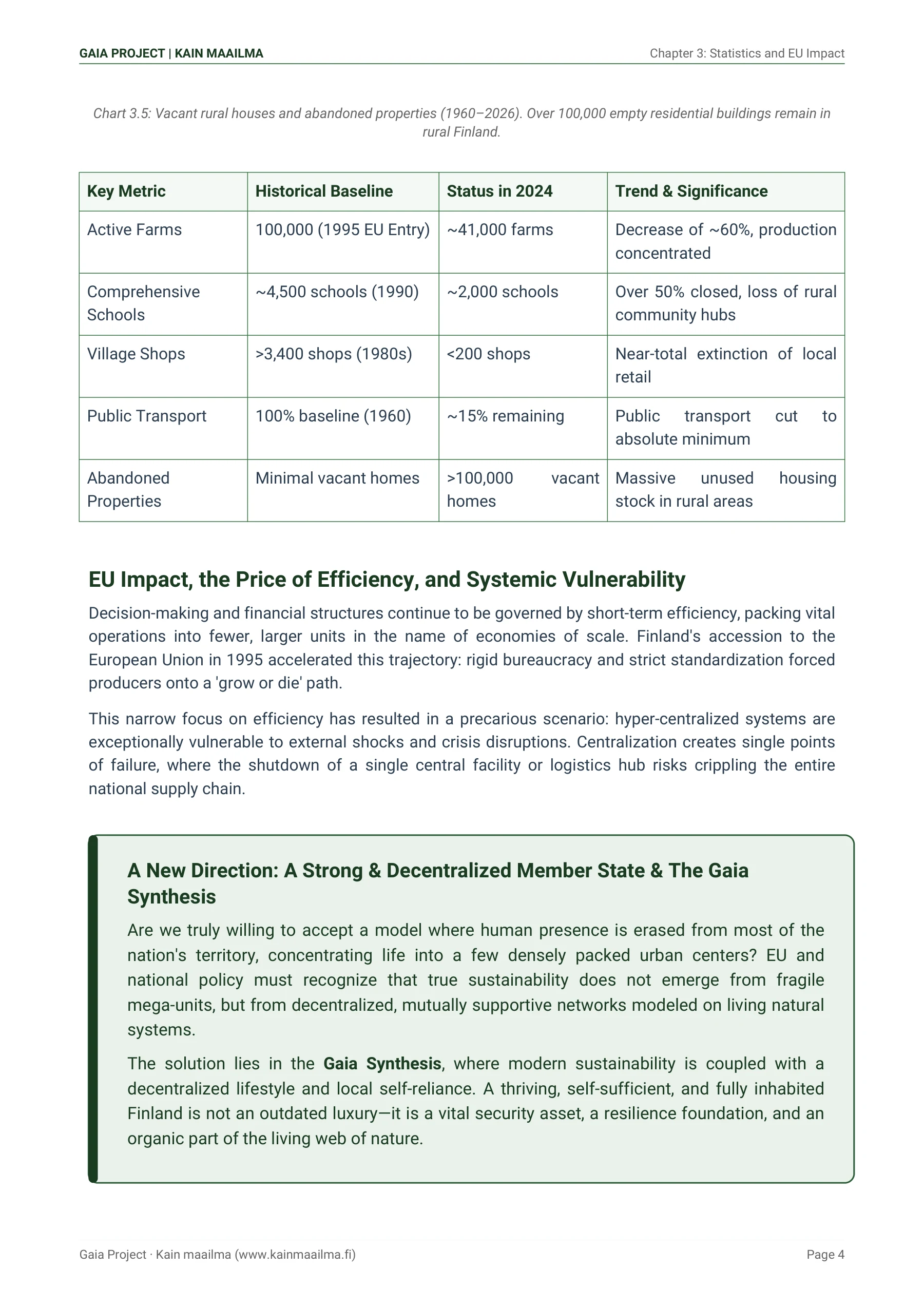
ChartSubjectFigures stated in the original
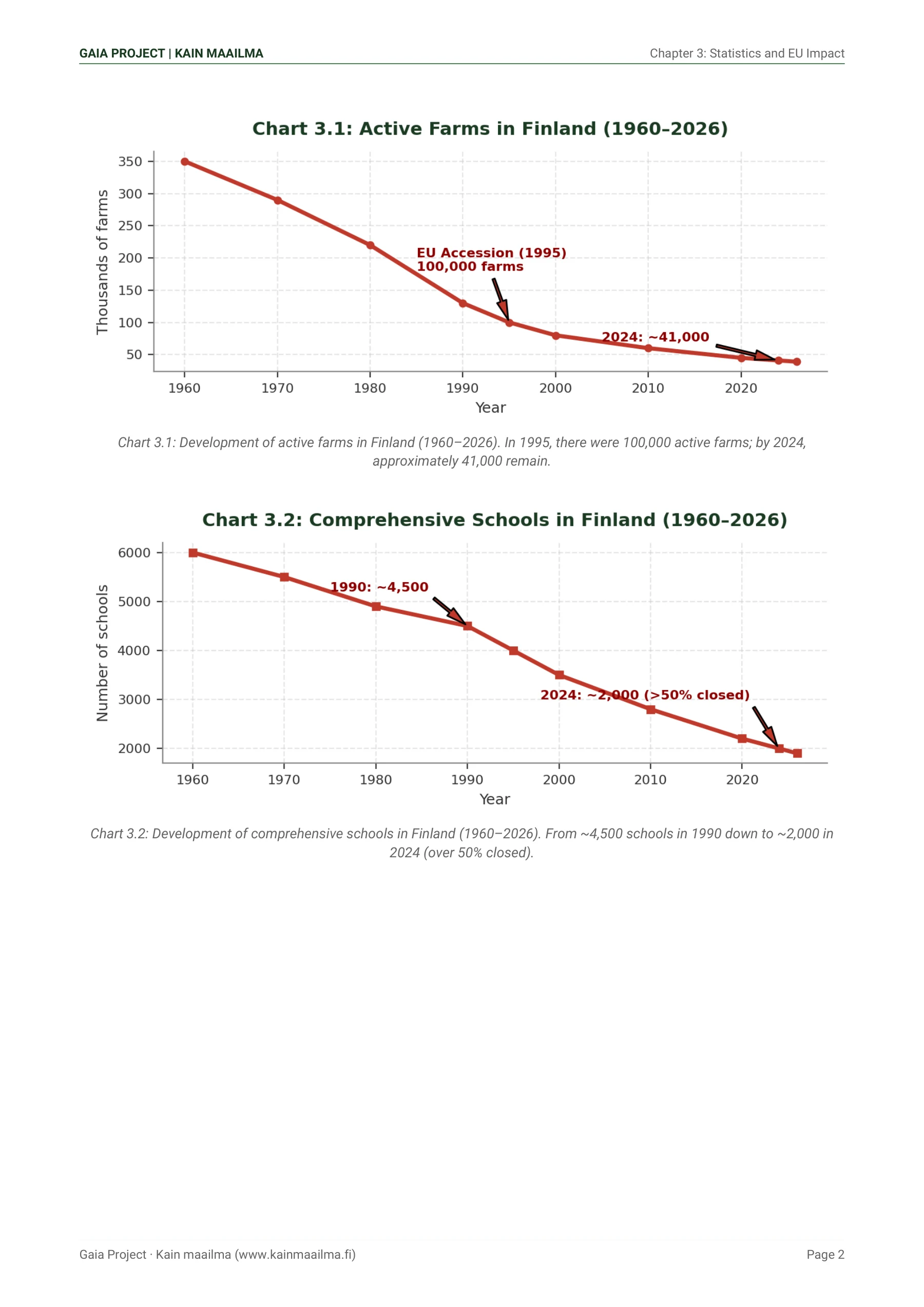
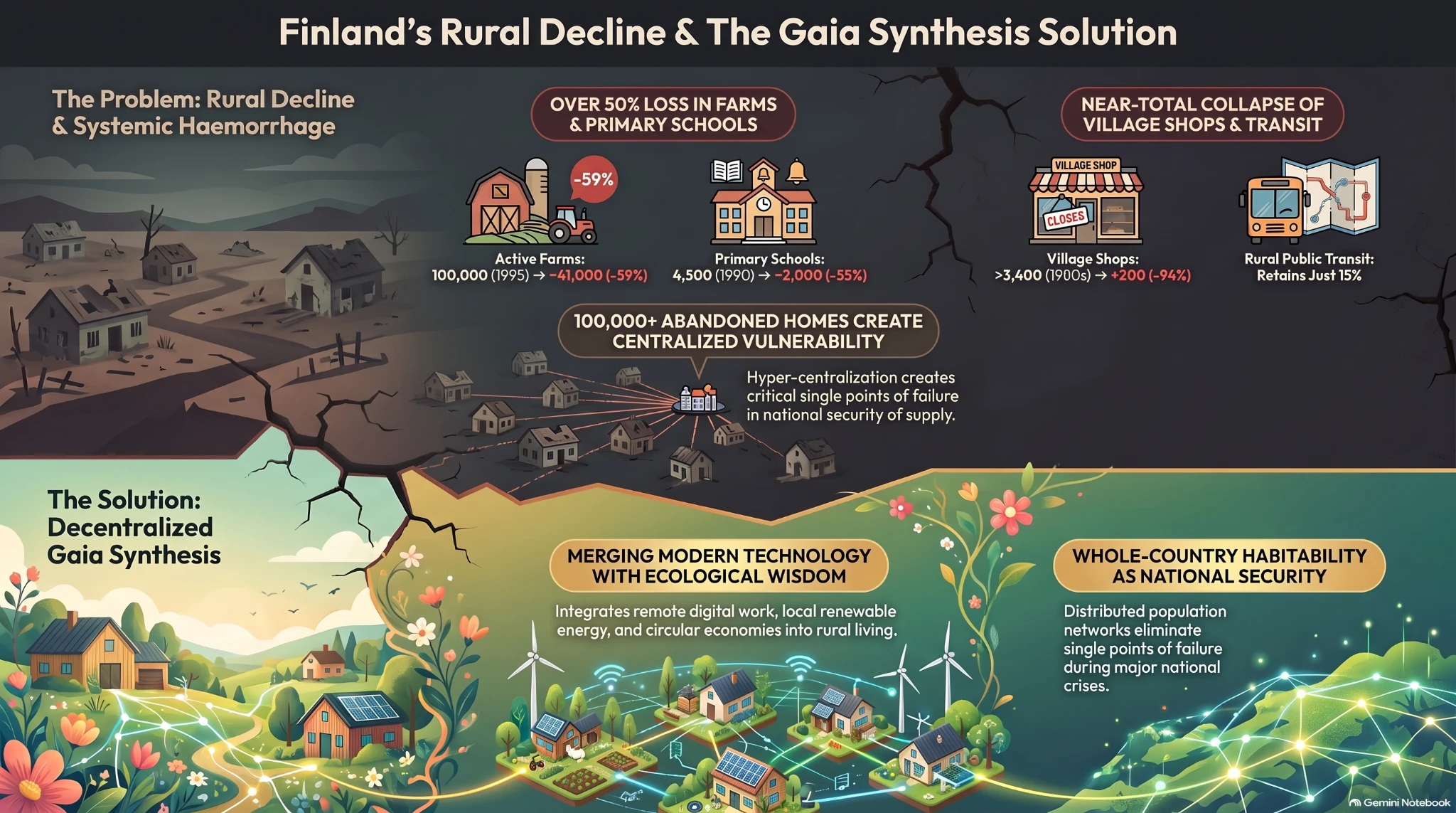
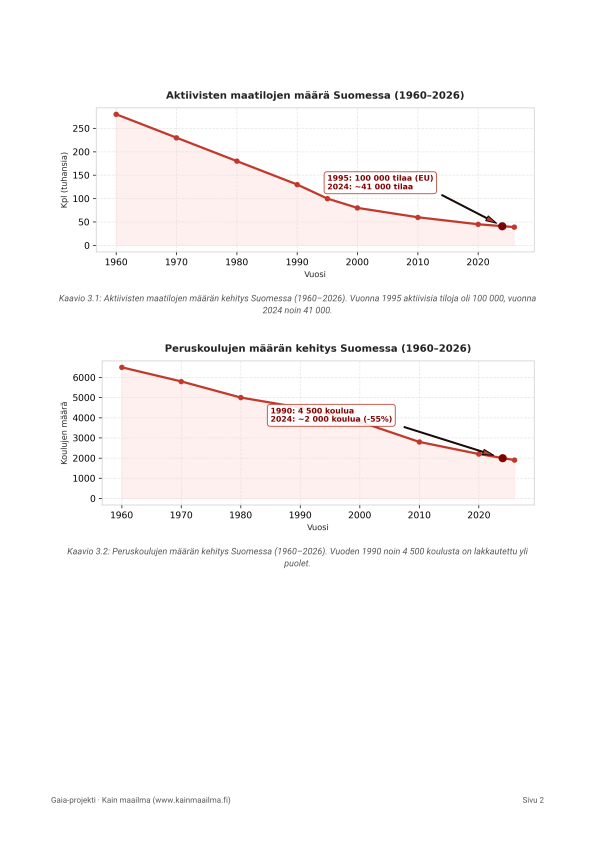
3.1Active farms in Finland100,000 in 1995; approximately 41,000 in 2024.
3.2Comprehensive schools in FinlandMore than half of the approximately 4,500 schools present in 1990 have closed.
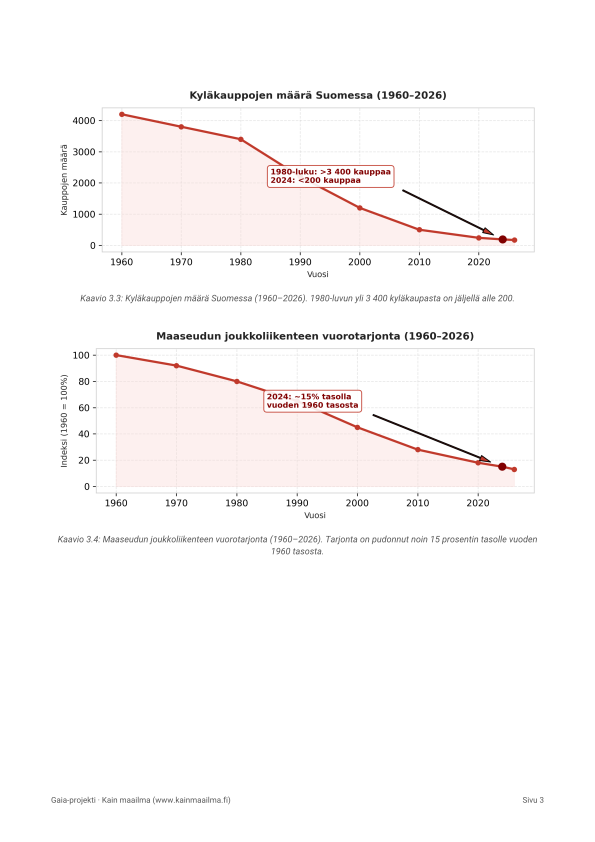
3.3Village shops in FinlandFewer than 200 remain, compared with over 3,400 in the 1980s.
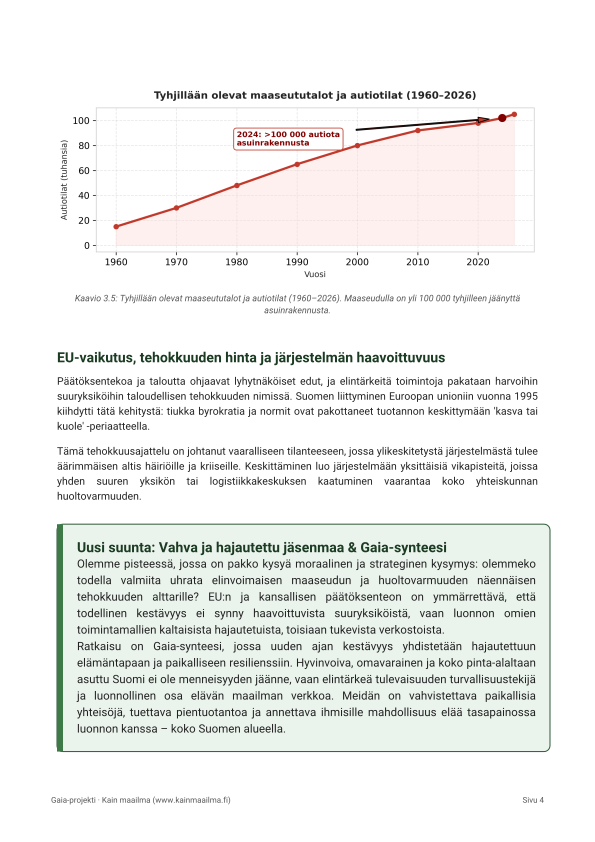
3.4Rural public transport servicesService provision has fallen to about 15% of its 1960 level.
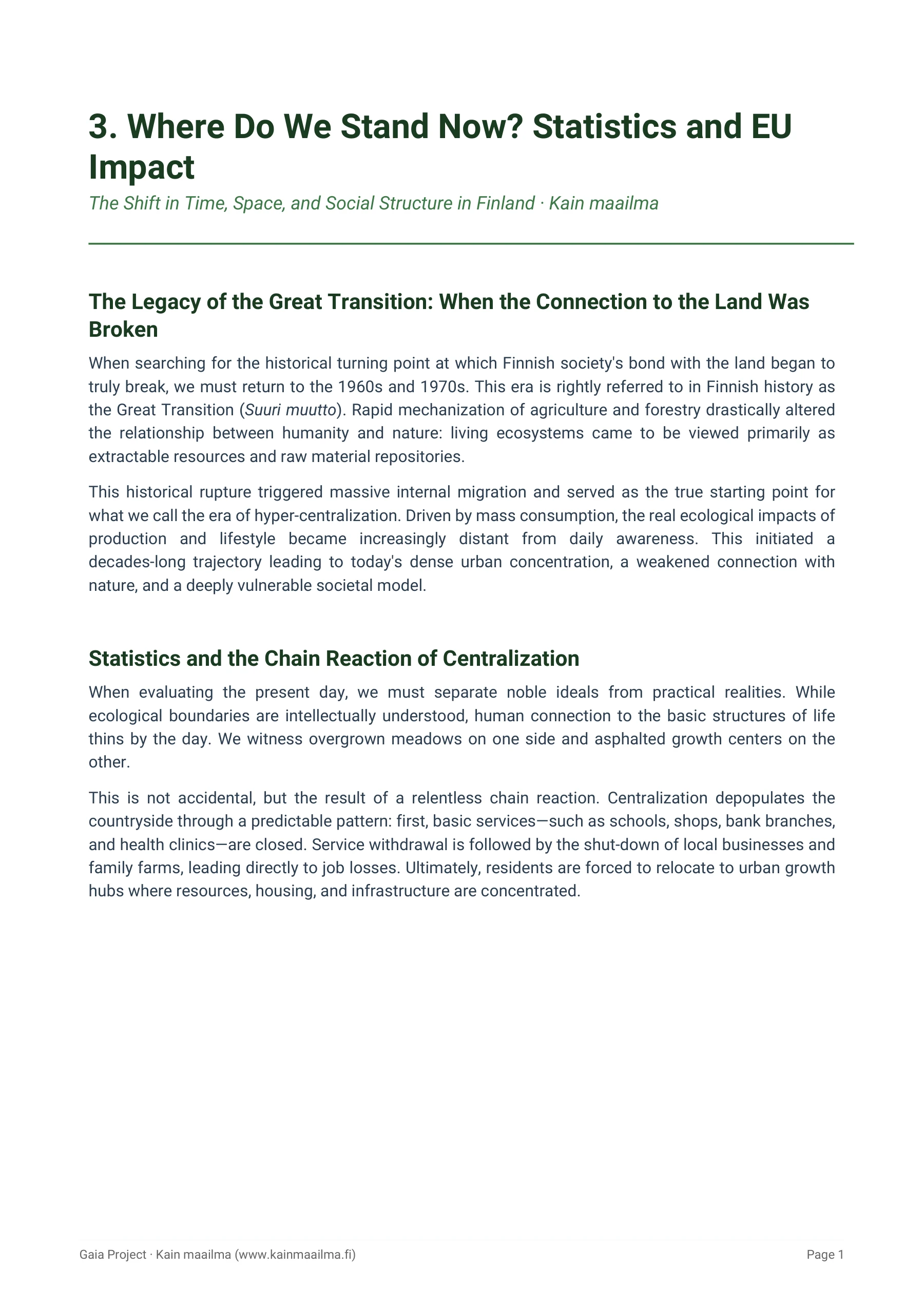
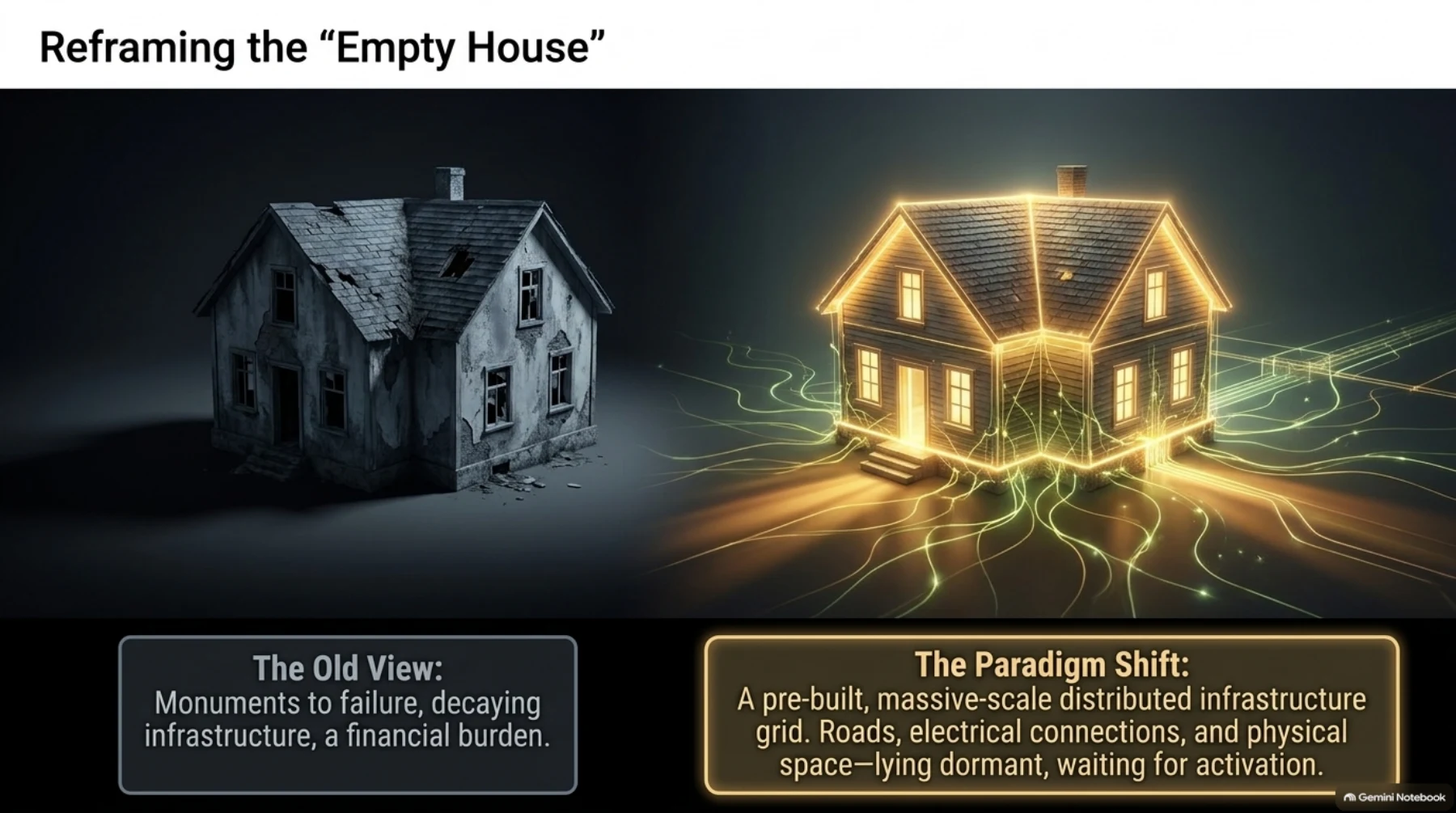
3.5Empty rural houses and abandoned farmsteadsMore than 100,000 residential buildings in rural areas stand empty.

The EU’s impact, the price of efficiency and system vulnerability

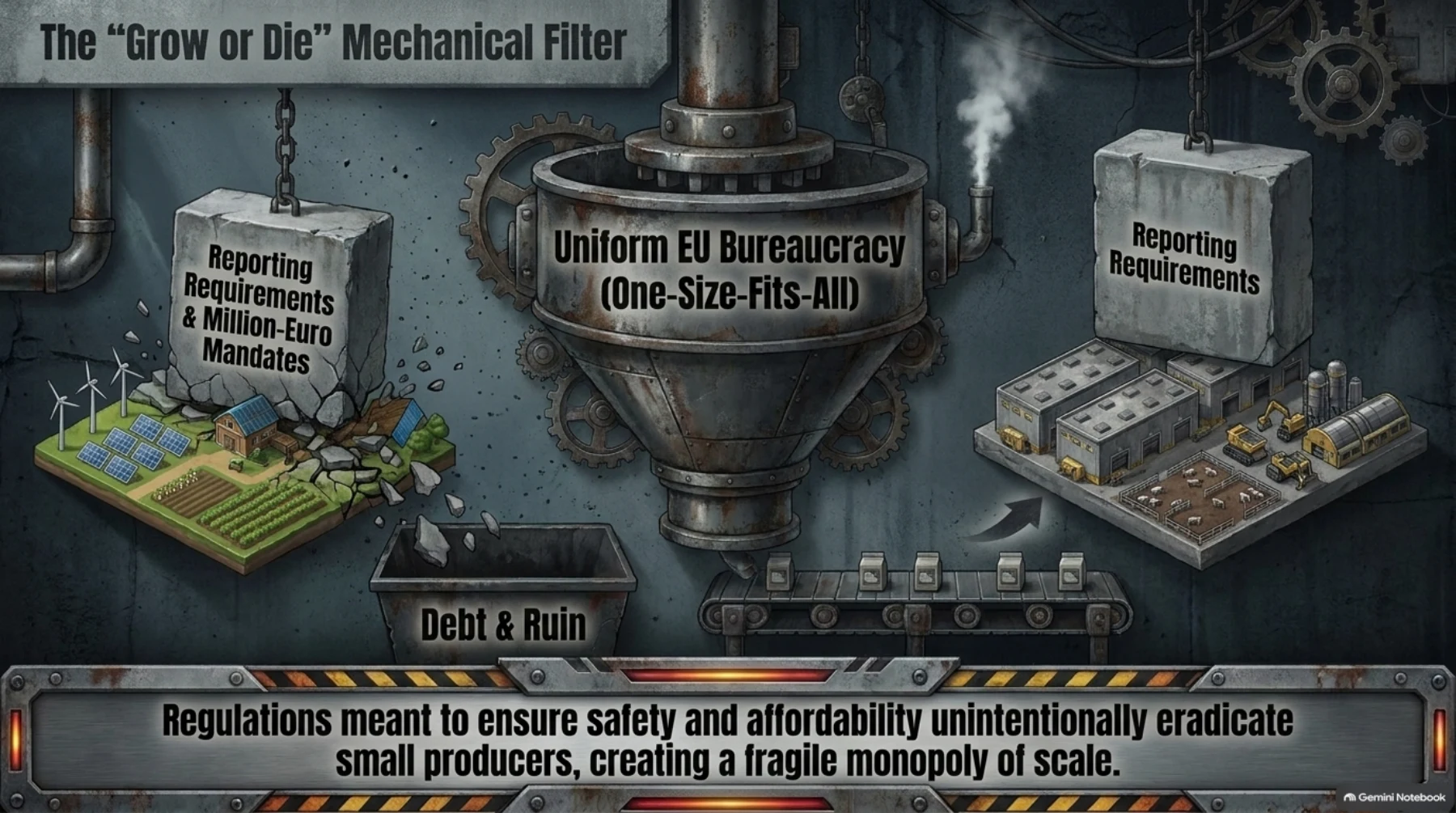
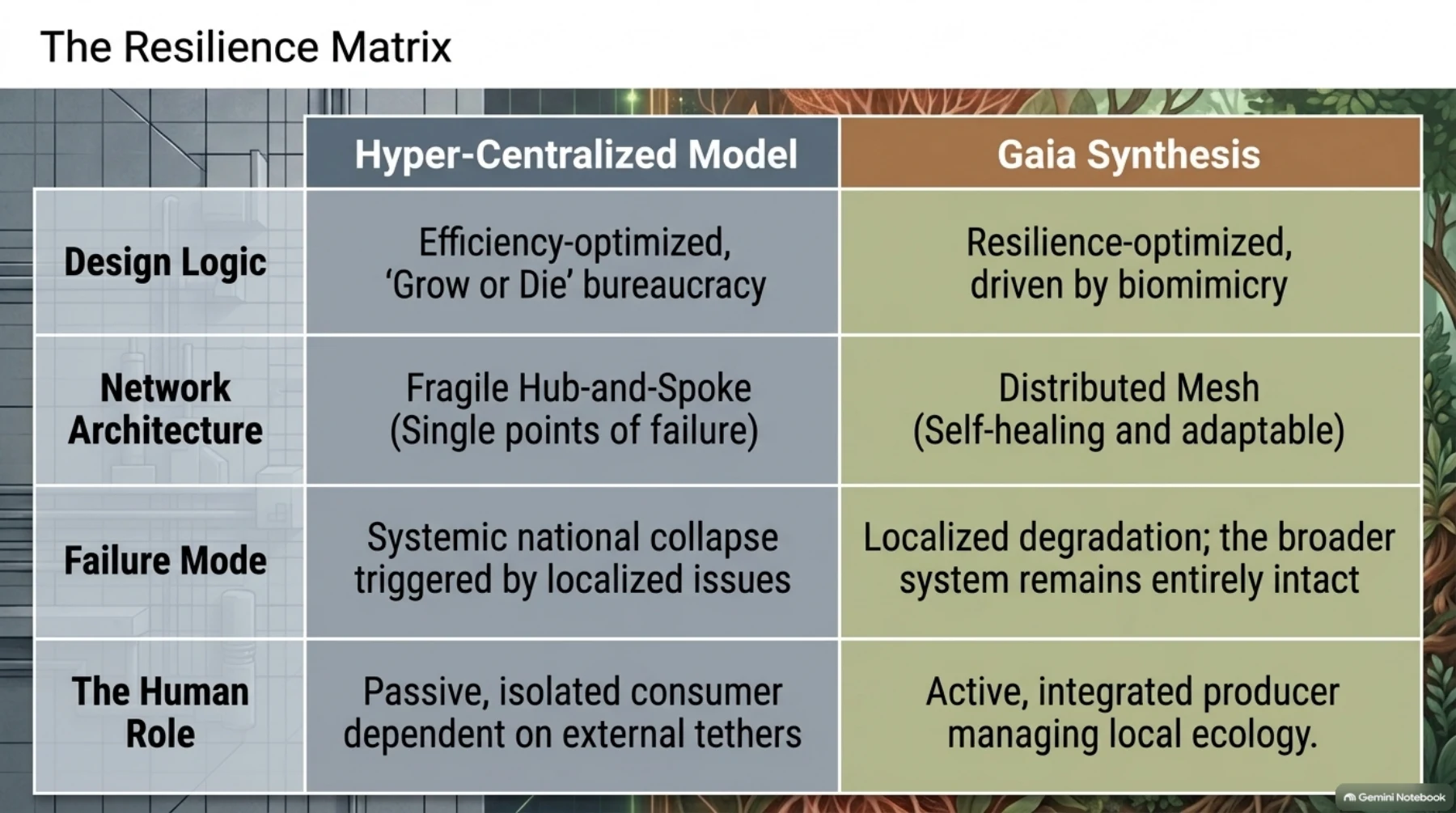
Short-term interests guide decision-making and the economy, while essential functions are packed into a few large units in the name of economic efficiency. Finland’s accession to the European Union in 1995 accelerated this development: strict bureaucracy and standards have forced production to concentrate according to a “grow or die” principle.

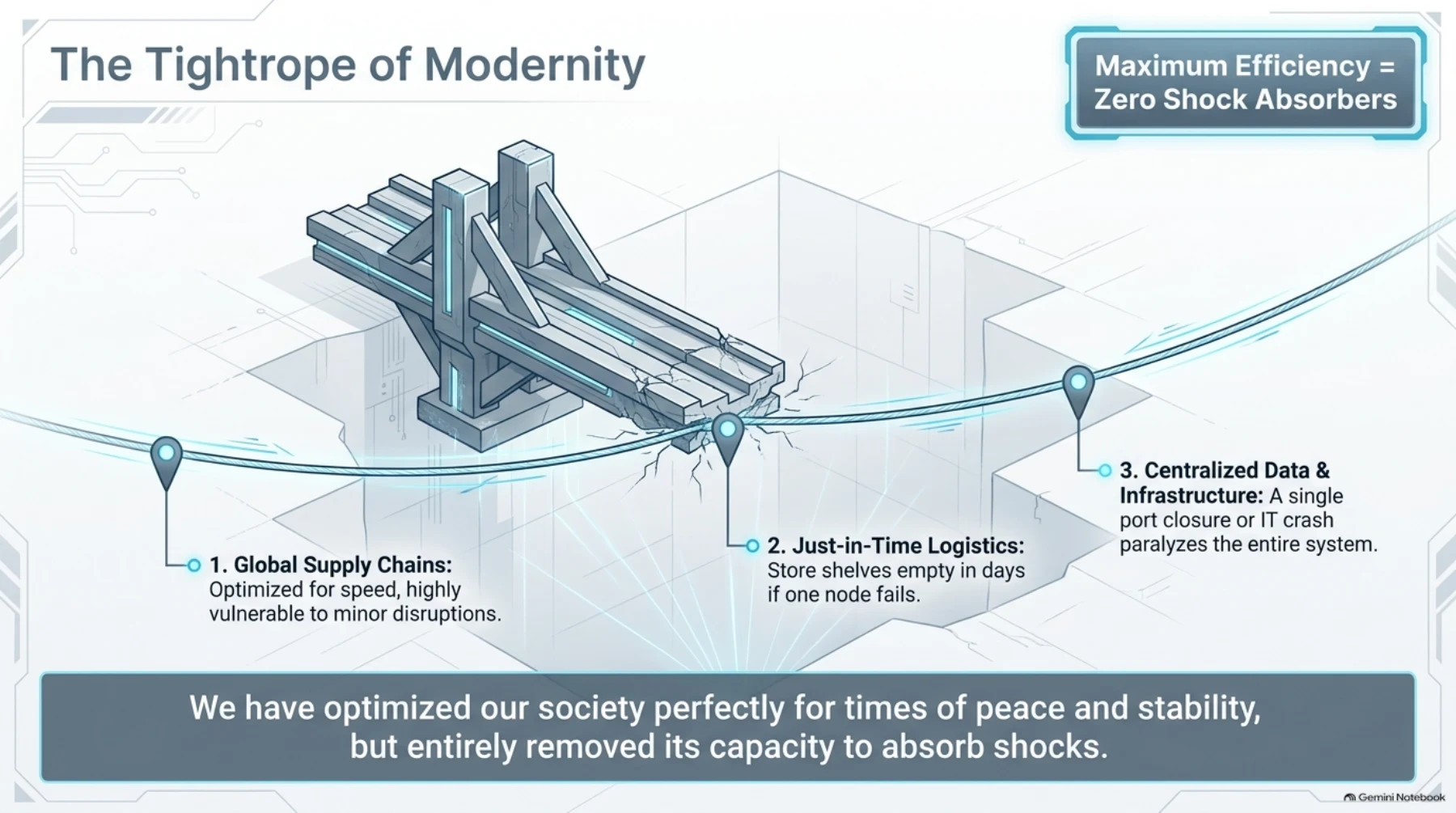
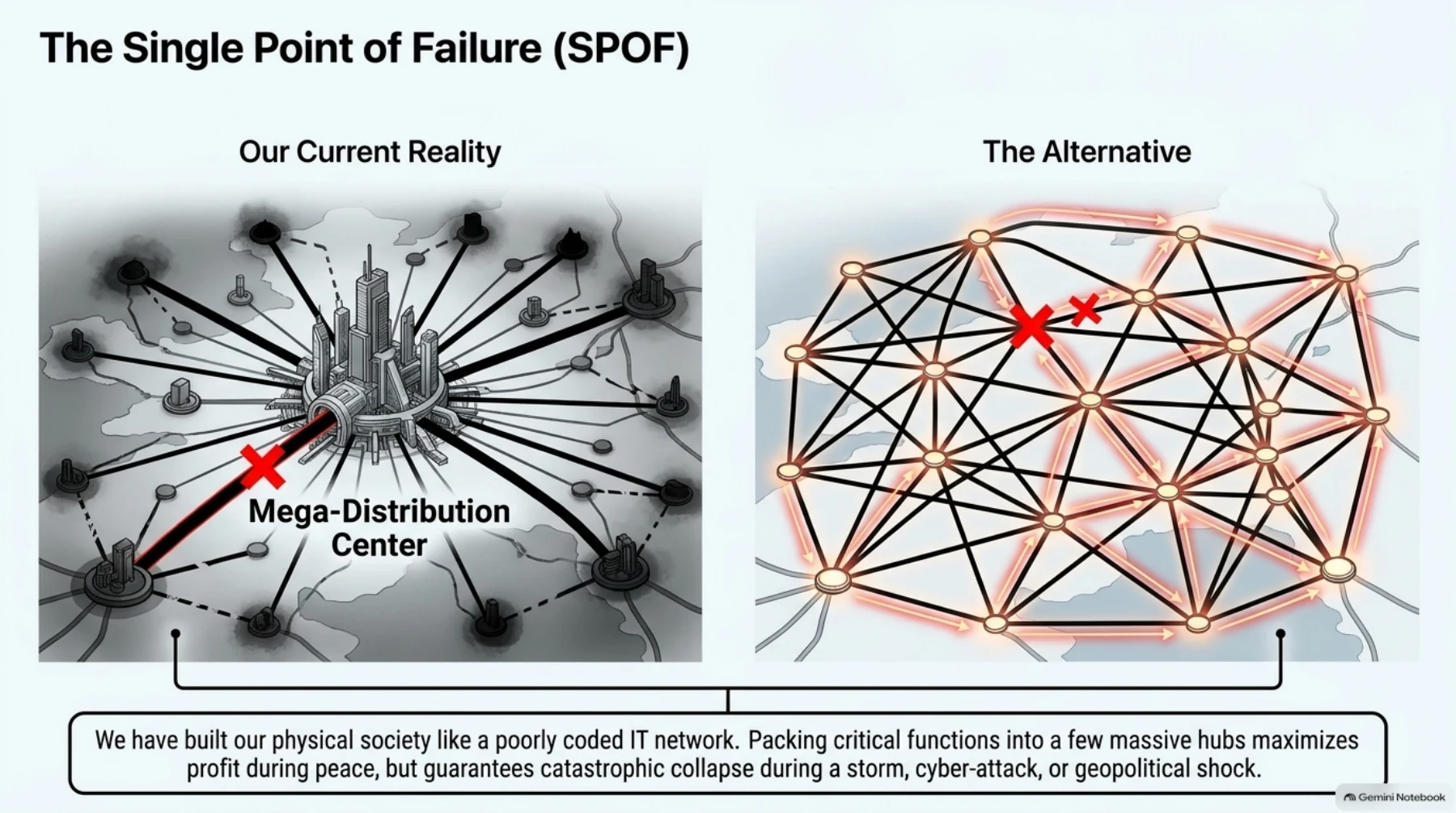
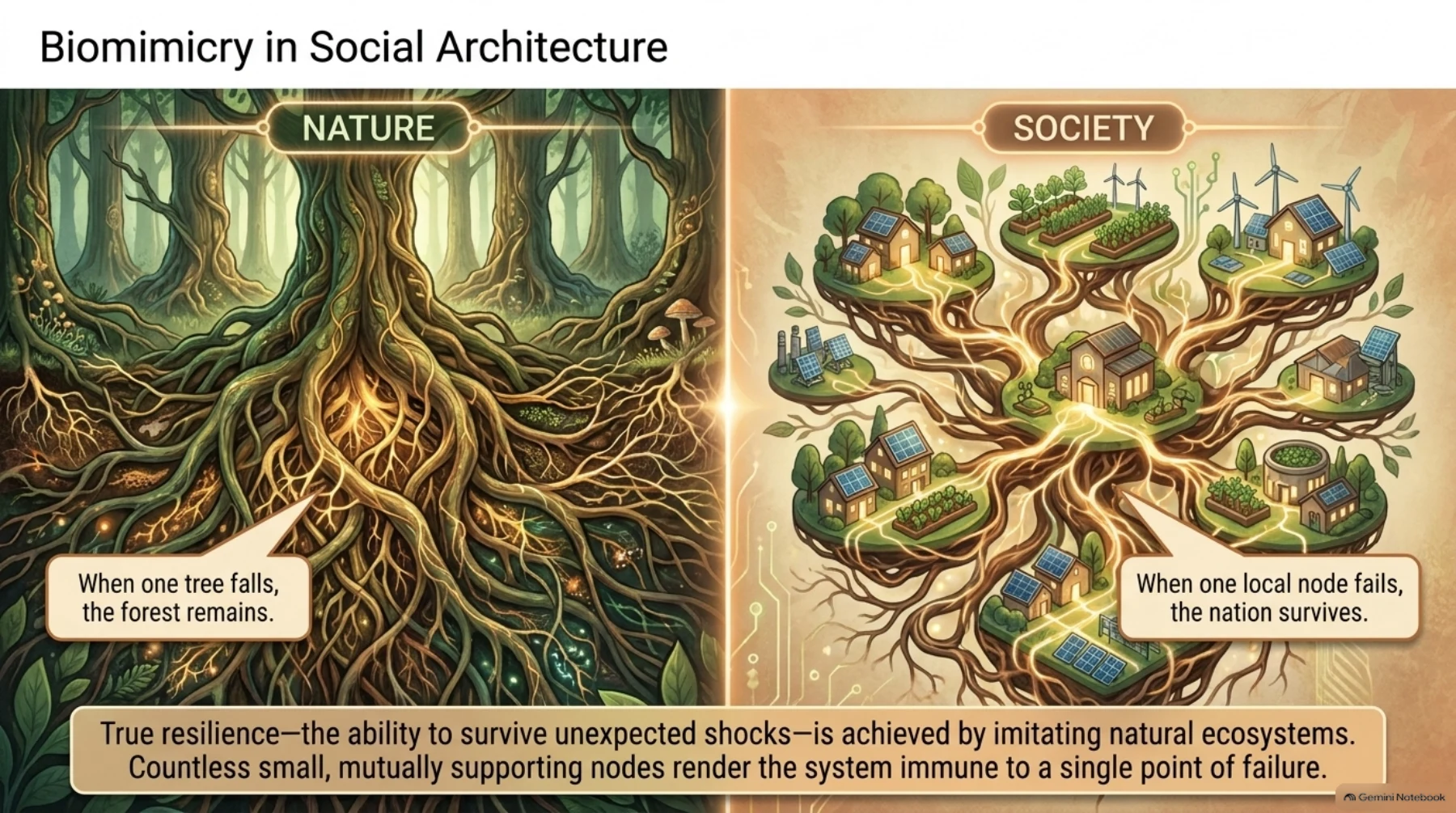
This focus on efficiency has led to a dangerous situation in which an excessively centralised system becomes extremely vulnerable to disruptions and crises. Centralisation creates single points of failure: the collapse of one large unit or logistics centre can jeopardise the security of supply of the whole society.

A new direction: a strong, decentralised member state and the Gaia synthesis

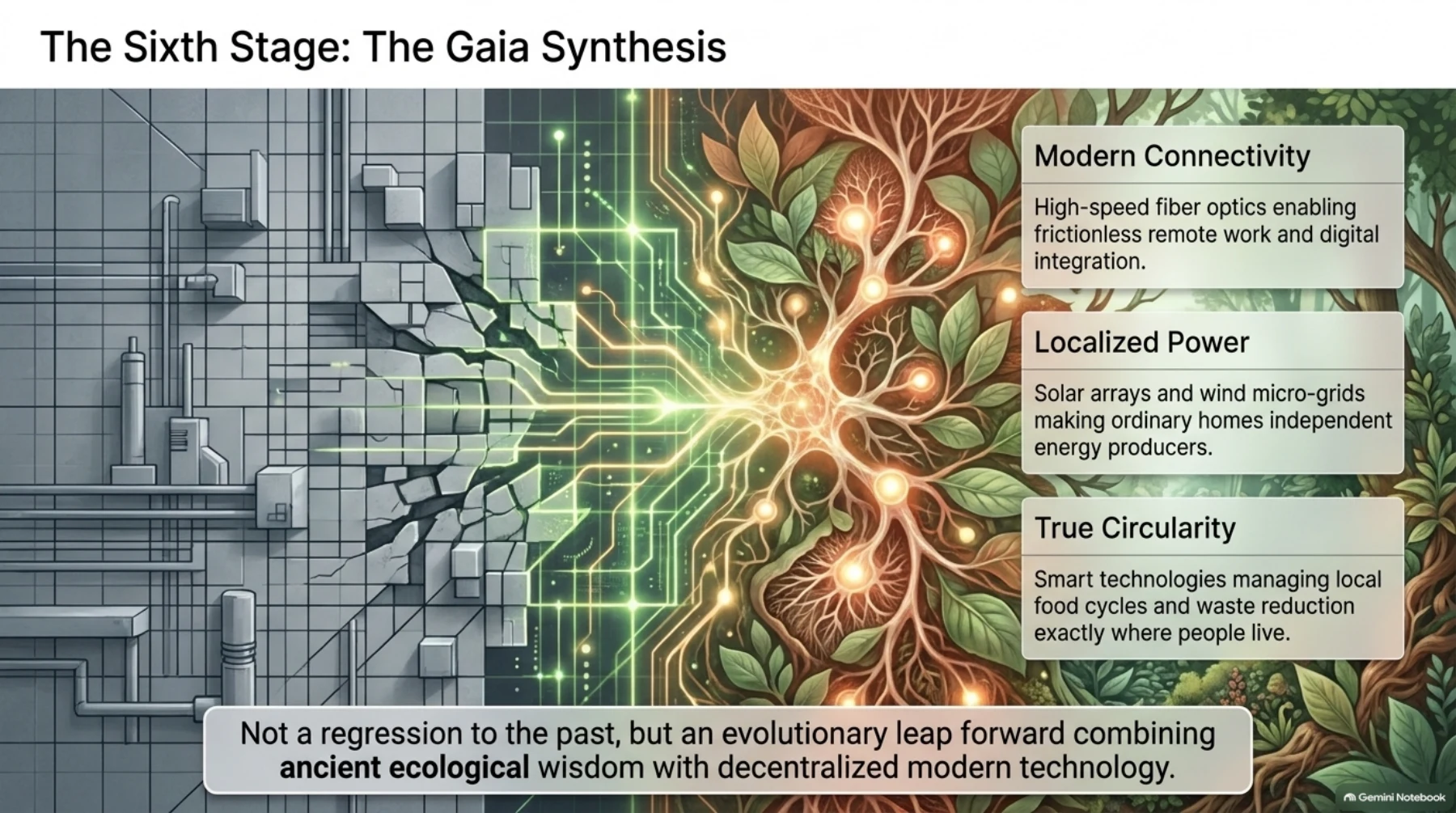
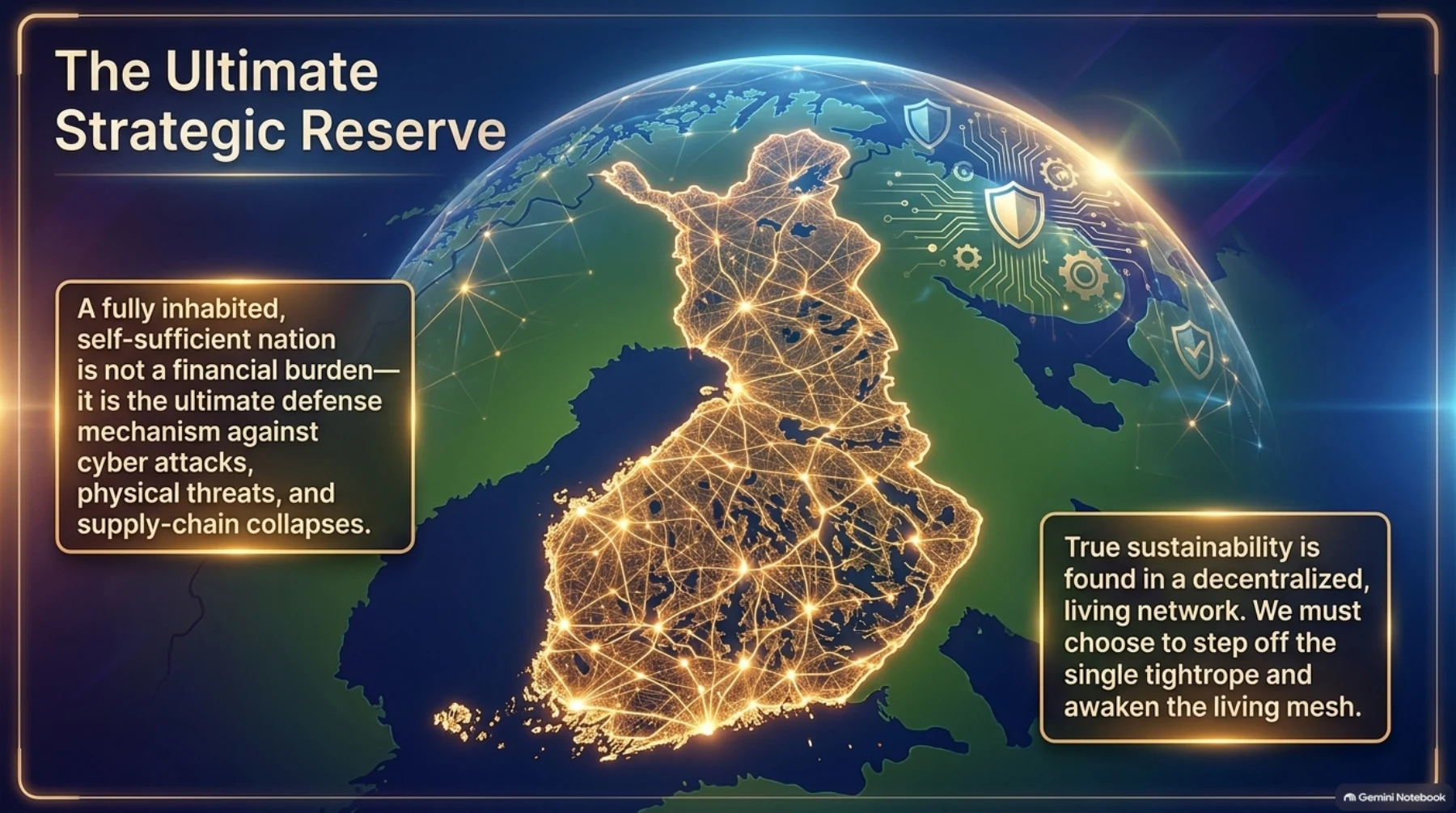
We have reached a point where we must ask a moral and strategic question: are we really prepared to sacrifice a vibrant countryside and security of supply on the altar of apparent efficiency? EU and national decision-makers must understand that true sustainability does not arise from vulnerable large units, but from decentralised, mutually supportive networks resembling nature’s own ways of functioning.

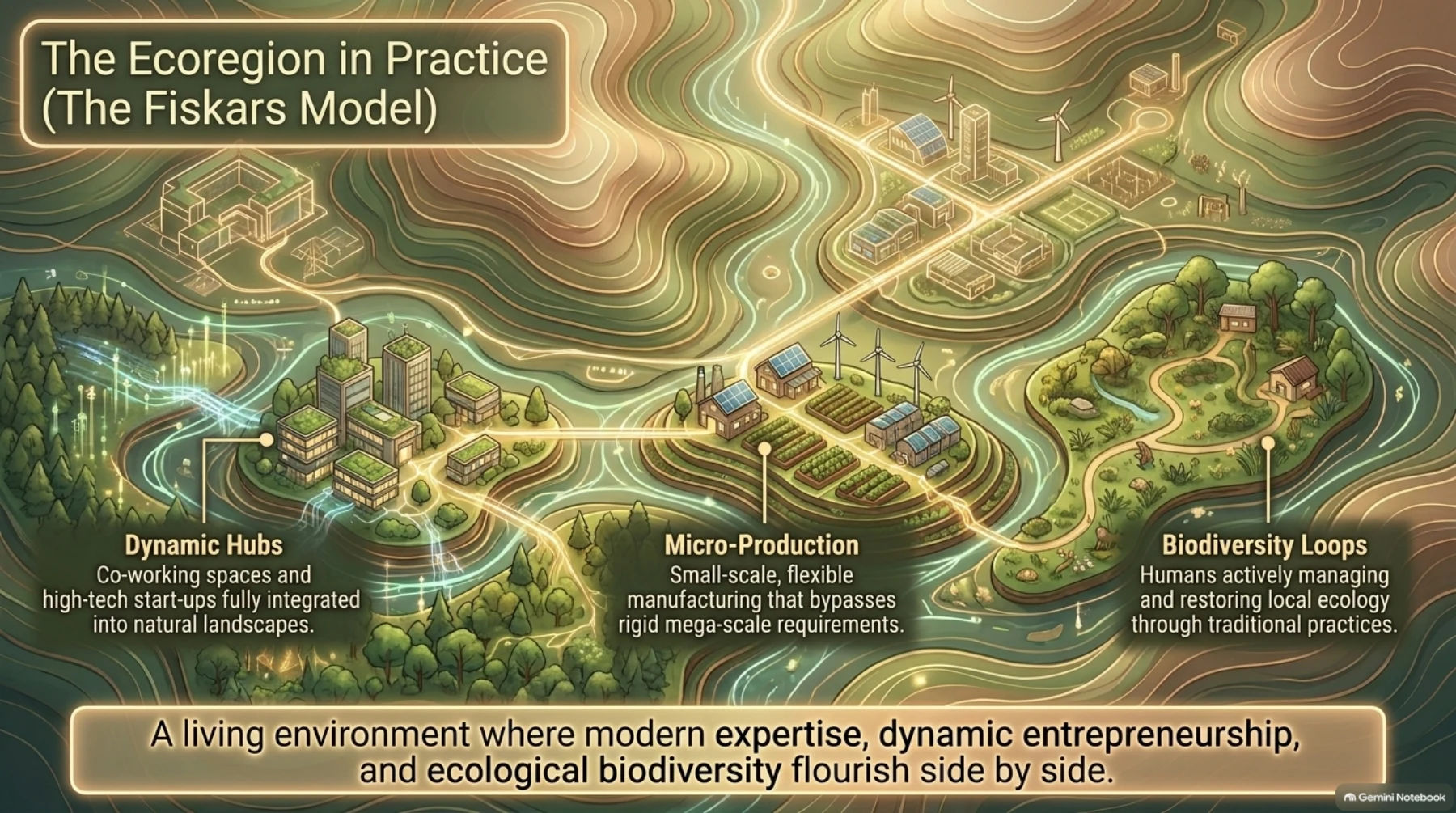
The solution is a Gaia synthesis that combines modern sustainability with a decentralised way of life and local resilience. A thriving, self-sufficient Finland with settlement across its territory is not a relic of the past, but a vital source of future security and a natural part of the web of the living world. We must strengthen local communities, support small-scale production and give people the opportunity to live in balance with nature throughout Finland.
View original pages in Finnish
Gaia-projekti · Kain maailma (www.kainmaailma.fi)
Sivu 1
3. Mikä on tilanne nyt? Tilastot ja EU-vaikutus
Aika-, tila- ja yhteiskuntarakenteen murros Suomessa · Kain maailma
Suuren muuton perintö: Kun yhteys maahan katkesi
Kun etsimme sitä historiallista käännekohtaa, jolloin suomalaisen yhteiskunnan yhteys maahan alkoi
todella murtua, on palattava 1960- ja 1970-luvuille. Tätä aikakautta kutsutaan Suomen historiassa
aiheellisesti Suureksi muutoksi. Maa- ja metsätalouden voimakas koneellistuminen muutti ihmisen ja
luonnon välistä suhdetta jyrkästi: elävä luonto alettiin nähdä yhä selvemmin pelkkänä hyödynnettävänä
resurssina ja raaka-ainevarastona.
Tämä historiallinen murros käynnisti massiivisen muuttoliikkeen ja oli todellinen alkupiste sille
kehitysvaiheelle, jota kutsumme ylikeskittämisen aikakaudeksi. Massakulutuksen myötä tuotannon ja
elämäntapamme todelliset luontovaikutukset etääntyivät arjesta. Tästä alkoi vuosikymmeniä jatkunut
kehityskulku, joka on johtanut nykyiseen yhä tiheämpään kaupunkirakenteeseen, heikentyneeseen
luontoyhteyteen ja syvästi haavoittuvaan yhteiskuntamalliin.
Tilastot ja keskittämisen ketjureaktio
Kun arvioimme nykyhetkeä, on erotettava toisistaan kauniit tavoitteet ja käytännön todellisuus. Vaikka
ymmärrämme luonnon asettamat ekologiset rajat, käytännön tasolla ihmisen yhteys elämän
perusrakenteisiin ohenee päivä päivältä. Näemme ympärillämme umpeen kasvavia niittyjä ja
asfaltoituvia kasvukeskuksia.
Tämä ei ole sattumaa, vaan seurausta armottomasta ketjureaktiosta. Keskittäminen autioittaa
maaseutua selkeän mallin mukaisesti: ensin lakkautetaan peruspalvelut kuten koulut, kaupat, pankit ja
terveysasemat. Palveluiden katoamista seuraa yritystoiminnan ja maatilojen lakkauttaminen, mikä
johtaa suoraan työpaikkojen katoamiseen. Lopulta ihmisten on pakko muuttaa näiden elintärkeiden
toimintojen perässä kasvukeskuksiin, joihin resurssit, asutus ja infrastruktuuri pakkautuvat.
Gaia-projekti · Kain maailma (www.kainmaailma.fi)
Sivu 2
Kaavio 3.1: Aktiivisten maatilojen määrän kehitys Suomessa (1960–2026). Vuonna 1995 aktiivisia tiloja oli 100 000, vuonna
2024 noin 41 000.
Kaavio 3.2: Peruskoulujen määrän kehitys Suomessa (1960–2026). Vuoden 1990 noin 4 500 koulusta on lakkautettu yli
puolet.
Gaia-projekti · Kain maailma (www.kainmaailma.fi)
Sivu 3
Kaavio 3.3: Kyläkauppojen määrä Suomessa (1960–2026). 1980-luvun yli 3 400 kyläkaupasta on jäljellä alle 200.
Kaavio 3.4: Maaseudun joukkoliikenteen vuorotarjonta (1960–2026). Tarjonta on pudonnut noin 15 prosentin tasolle vuoden
1960 tasosta.
Gaia-projekti · Kain maailma (www.kainmaailma.fi)
Sivu 4
Kaavio 3.5: Tyhjillään olevat maaseututalot ja autiotilat (1960–2026). Maaseudulla on yli 100 000 tyhjilleen jäänyttä
asuinrakennusta.
EU-vaikutus, tehokkuuden hinta ja järjestelmän haavoittuvuus
Päätöksentekoa ja taloutta ohjaavat lyhytnäköiset edut, ja elintärkeitä toimintoja pakataan harvoihin
suuryksiköihin taloudellisen tehokkuuden nimissä. Suomen liittyminen Euroopan unioniin vuonna 1995
kiihdytti tätä kehitystä: tiukka byrokratia ja normit ovat pakottaneet tuotannon keskittymään 'kasva tai
kuole' -periaatteella.
Tämä tehokkuusajattelu on johtanut vaaralliseen tilanteeseen, jossa ylikeskitetystä järjestelmästä tulee
äärimmäisen altis häiriöille ja kriiseille. Keskittäminen luo järjestelmään yksittäisiä vikapisteitä, joissa
yhden
suuren
yksikön
tai
logistiikkakeskuksen
kaatuminen
vaarantaa
koko
yhteiskunnan
huoltovarmuuden.
Uusi suunta: Vahva ja hajautettu jäsenmaa & Gaia-synteesi
Olemme pisteessä, jossa on pakko kysyä moraalinen ja strateginen kysymys: olemmeko
todella valmiita uhrata elinvoimaisen maaseudun ja huoltovarmuuden näennäisen
tehokkuuden alttarille? EU:n ja kansallisen päätöksenteon on ymmärrettävä, että
todellinen kestävyys ei synny haavoittuvista suuryksiköistä, vaan luonnon omien
toimintamallien kaltaisista hajautetuista, toisiaan tukevista verkostoista.
Ratkaisu on Gaia-synteesi, jossa uuden ajan kestävyys yhdistetään hajautettuun
elämäntapaan ja paikalliseen resilienssiin. Hyvinvoiva, omavarainen ja koko pinta-alaltaan
asuttu Suomi ei ole menneisyyden jäänne, vaan elintärkeä tulevaisuuden turvallisuustekijä
ja luonnollinen osa elävän maailman verkkoa. Meidän on vahvistettava paikallisia
yhteisöjä, tuettava pientuotantoa ja annettava ihmisille mahdollisuus elää tasapainossa
luonnon kanssa – koko Suomen alueella.

Open the chapter as a PDF (Finnish)

Where Do We Stand Now? Statistics and EU Impact

Read all pages below, or download the PDF.

Chapter 3 Statistics En, page 1 of 4
Page 1 / 4
Gaia Project · Kain maailma (www.kainmaailma.fi)
Page 1
3. Where Do We Stand Now? Statistics and EU
Impact
The Shift in Time, Space, and Social Structure in Finland · Kain maailma
The Legacy of the Great Transition: When the Connection to the Land Was
Broken
When searching for the historical turning point at which Finnish society's bond with the land began to
truly break, we must return to the 1960s and 1970s. This era is rightly referred to in Finnish history as
the Great Transition (Suuri muutto). Rapid mechanization of agriculture and forestry drastically altered
the relationship between humanity and nature: living ecosystems came to be viewed primarily as
extractable resources and raw material repositories.
This historical rupture triggered massive internal migration and served as the true starting point for
what we call the era of hyper-centralization. Driven by mass consumption, the real ecological impacts of
production and lifestyle became increasingly distant from daily awareness. This initiated a
decades-long trajectory leading to today's dense urban concentration, a weakened connection with
nature, and a deeply vulnerable societal model.
Statistics and the Chain Reaction of Centralization
When evaluating the present day, we must separate noble ideals from practical realities. While
ecological boundaries are intellectually understood, human connection to the basic structures of life
thins by the day. We witness overgrown meadows on one side and asphalted growth centers on the
other.
This is not accidental, but the result of a relentless chain reaction. Centralization depopulates the
countryside through a predictable pattern: first, basic services—such as schools, shops, bank branches,
and health clinics—are closed. Service withdrawal is followed by the shut-down of local businesses and
family farms, leading directly to job losses. Ultimately, residents are forced to relocate to urban growth
hubs where resources, housing, and infrastructure are concentrated.
Chapter 3 Statistics En, page 2 of 4
Page 2 / 4
GAIA PROJECT | KAIN MAAILMA
Chapter 3: Statistics and EU Impact
Gaia Project · Kain maailma (www.kainmaailma.fi)
Page 2
Chart 3.1: Development of active farms in Finland (1960–2026). In 1995, there were 100,000 active farms; by 2024,
approximately 41,000 remain.
Chart 3.2: Development of comprehensive schools in Finland (1960–2026). From ~4,500 schools in 1990 down to ~2,000 in
2024 (over 50% closed).
Chapter 3 Statistics En, page 3 of 4
Page 3 / 4
GAIA PROJECT | KAIN MAAILMA
Chapter 3: Statistics and EU Impact
Gaia Project · Kain maailma (www.kainmaailma.fi)
Page 3
Chart 3.3: Number of village shops in Finland (1960–2026). From over 3,400 in the 1980s to under 200 today.
Chart 3.4: Rural public transport service level (1960–2026). Bus services cut to approximately 15% of 1960 baseline levels.
Chapter 3 Statistics En, page 4 of 4
Page 4 / 4
GAIA PROJECT | KAIN MAAILMA
Chapter 3: Statistics and EU Impact
Gaia Project · Kain maailma (www.kainmaailma.fi)
Page 4
Chart 3.5: Vacant rural houses and abandoned properties (1960–2026). Over 100,000 empty residential buildings remain in
rural Finland.
Key Metric
Historical Baseline
Status in 2024
Trend & Significance
Active Farms
100,000 (1995 EU Entry)
~41,000 farms
Decrease of ~60%, production
concentrated
Comprehensive
Schools
~4,500 schools (1990)
~2,000 schools
Over 50% closed, loss of rural
community hubs
Village Shops
>3,400 shops (1980s)
<200 shops
Near-total extinction of local
retail
Public Transport
100% baseline (1960)
~15% remaining
Public
transport
cut
to
absolute minimum
Abandoned
Properties
Minimal vacant homes
>100,000
vacant
homes
Massive
unused
housing
stock in rural areas
EU Impact, the Price of Efficiency, and Systemic Vulnerability
Decision-making and financial structures continue to be governed by short-term efficiency, packing vital
operations into fewer, larger units in the name of economies of scale. Finland's accession to the
European Union in 1995 accelerated this trajectory: rigid bureaucracy and strict standardization forced
producers onto a 'grow or die' path.
This narrow focus on efficiency has resulted in a precarious scenario: hyper-centralized systems are
exceptionally vulnerable to external shocks and crisis disruptions. Centralization creates single points
of failure, where the shutdown of a single central facility or logistics hub risks crippling the entire
national supply chain.
A New Direction: A Strong & Decentralized Member State & The Gaia
Synthesis
Are we truly willing to accept a model where human presence is erased from most of the
nation's territory, concentrating life into a few densely packed urban centers? EU and
national policy must recognize that true sustainability does not emerge from fragile
mega-units, but from decentralized, mutually supportive networks modeled on living natural
systems.
The solution lies in the Gaia Synthesis, where modern sustainability is coupled with a
decentralized lifestyle and local self-reliance. A thriving, self-sufficient, and fully inhabited
Finland is not an outdated luxury—it is a vital security asset, a resilience foundation, and an
organic part of the living web of nature.

The Living Mesh

Read all pages below, or download the PDF.

Living Mesh En, page 1 of 15
Page 1 / 15
Living Mesh En, page 2 of 15
Page 2 / 15
Living Mesh En, page 3 of 15
Page 3 / 15
Living Mesh En, page 4 of 15
Page 4 / 15
Living Mesh En, page 5 of 15
Page 5 / 15
Living Mesh En, page 6 of 15
Page 6 / 15
Living Mesh En, page 7 of 15
Page 7 / 15
Living Mesh En, page 8 of 15
Page 8 / 15
Living Mesh En, page 9 of 15
Page 9 / 15
Living Mesh En, page 10 of 15
Page 10 / 15
Living Mesh En, page 11 of 15
Page 11 / 15
Living Mesh En, page 12 of 15
Page 12 / 15
Living Mesh En, page 13 of 15
Page 13 / 15
Living Mesh En, page 14 of 15
Page 14 / 15
Living Mesh En, page 15 of 15
Page 15 / 15

Finland’s Rural Decline — infographic

Finland’s Rural Decline: English infographic about centralization and the countryside.

View the infographic at full size

How Centralization Caused Finland’s Rural Collapse — audio

Open the English recording

The Gaia Synthesis — video

Open the English video